Probabilistic Thinking in Trading: Why One Trade Proves Nothing
Most traders know the market is uncertain, yet trade as if every position must win. Thinking in probabilities means judging yourself by a series of trades, not by the last one.
November 1, 2026·3 min read·Vlevel team
 Trading psychology
Flip a coin ten times and get seven heads, and you don't conclude the coin is broken. Yet many traders do exactly that with a strategy: three losses in a row, "it doesn't work any more", and on to the next method. The problem usually isn't the strategy; it's taking the outcome of each trade more seriously than it deserves.
What the market takes from most traders
Brad Barber, Terrance Odean and colleagues studied complete records from the Taiwan Stock Exchange, one of the few markets where every trade by every person is on file. In their 2004 paper, more than eight in ten day traders lost money over a typical six-month period. Even the most active traders, profitable before costs, gave much of their gains away in fees and trading costs. Later work by the same group found that many of them kept trading for years despite the losses.
These numbers aren't there to scare anyone; they show that a trader's *feeling* about their own skill is unreliable. What is reliable is the statistics of many trades.
An edge is a probability, not a certainty
In Trading in the Zone, Mark Douglas put it simply: a strategy's edge only means one outcome is somewhat more likely than another. Anything can happen; you don't need to know what happens next to make money overall; and the wins and losses of a profitable strategy arrive in random order.
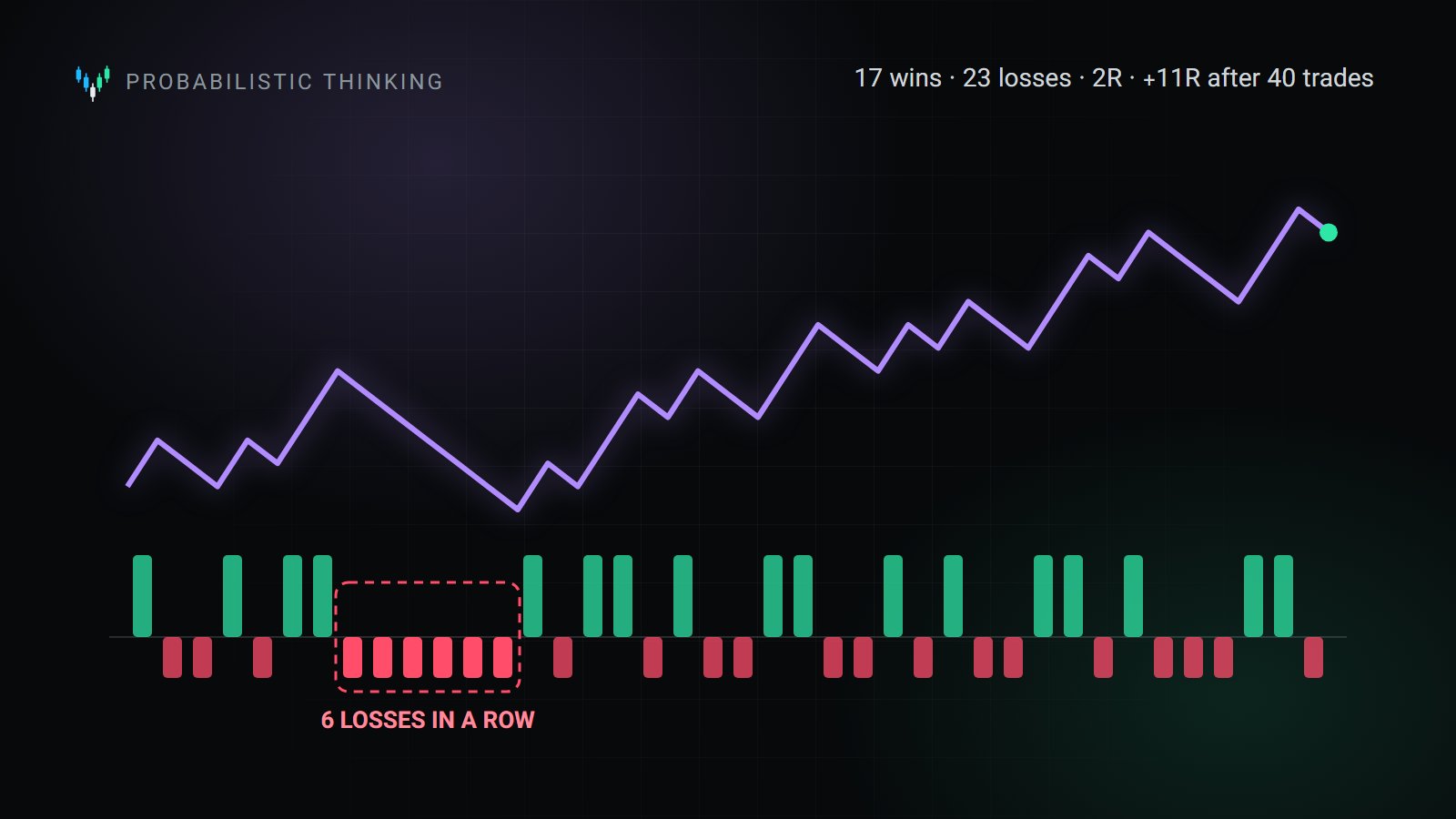
A simple example: a strategy that wins 45 percent of the time with a 2-to-1 reward-to-risk is profitable in the long run. The same strategy can easily produce five or six losses in a row. Abandon it after the fourth and you've dropped it at the exact moment it was behaving most normally.
Judge yourself by a series, not a trade
- Change the unit of judgement: instead of "was this trade good or bad?", ask "did my last 20 trades follow the rules?". Chance decides one trade; the edge decides a hundred.
- Accept the risk before you enter: if the stop and size were set in advance, a loss is part of the plan, not a failure. Someone who has truly accepted the risk doesn't move the stop when price reaches it.
- Know the usual worst case: look up the strategy's longest losing streak and deepest drawdown in a backtest, so they don't surprise you live.
- Keep the risk per trade small: when each trade risks only a small part of the account, no single trade matters enough to lock up your thinking. That's what position sizing is for.
Signs you're not thinking in probabilities yet
- After a big win you size up the next trade because you've "figured the market out".
- After two or three losses you change your rules without testing the change.
- You hesitate to take a setup your rules say is valid because the last trade lost.
- You're hunting for an indicator or signal that's "never wrong".
The bottom line
A trader who thinks in probabilities doesn't like losing, but isn't afraid of it. They know one trade is just one sample from a distribution, so they follow their rules, keep risk small and save judgement for after enough trades. That small shift in view removes many emotional mistakes at the root.
Sources
- Do Individual Day Traders Make Money? Evidence from Taiwan · Barber, Lee, Liu, Odean · Working paper, 2004
- Do Day Traders Rationally Learn About Their Ability? · Barber, Lee, Liu, Odean, Zhang · Working paper
- Trading in the Zone · Mark Douglas · Book, 2000
This article is for education only and is not a recommendation to buy or sell any asset. Trading financial markets, especially with leverage, carries high risk.
See the tools for yourself
A live chart with market depth, dozens of indicators and drawing tools, and a Lab that turns an idea into a backtested strategy.
More articles
 Trading psychology
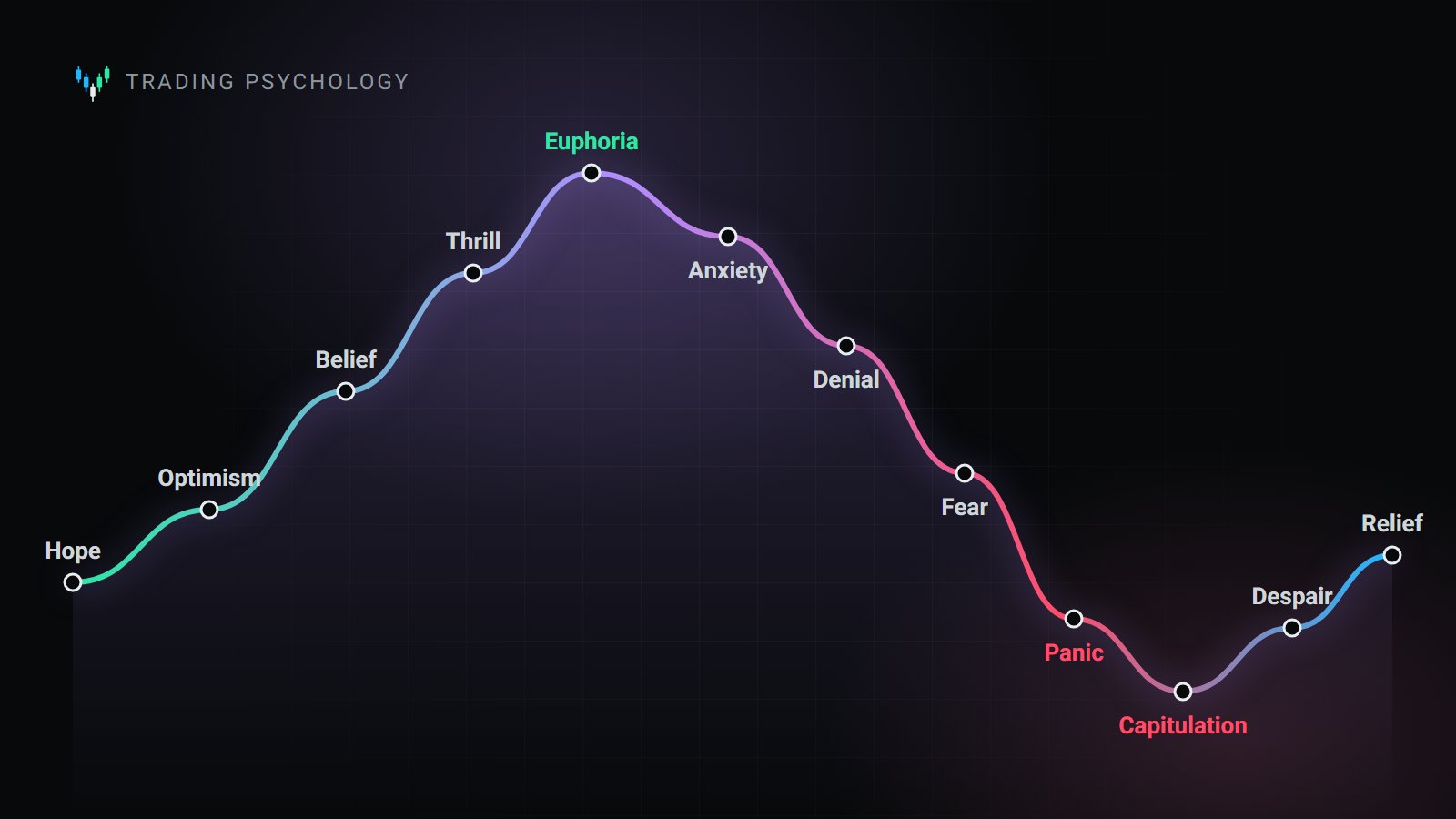
Trading Psychology: The Mind That Costs You More Than the Market
Loss aversion, revenge trading, FOMO and overconfidence: the mental errors that ruin even a good strategy, and practical ways to keep them in check.
November 5, 2026 · 2 min read
 Trading psychology
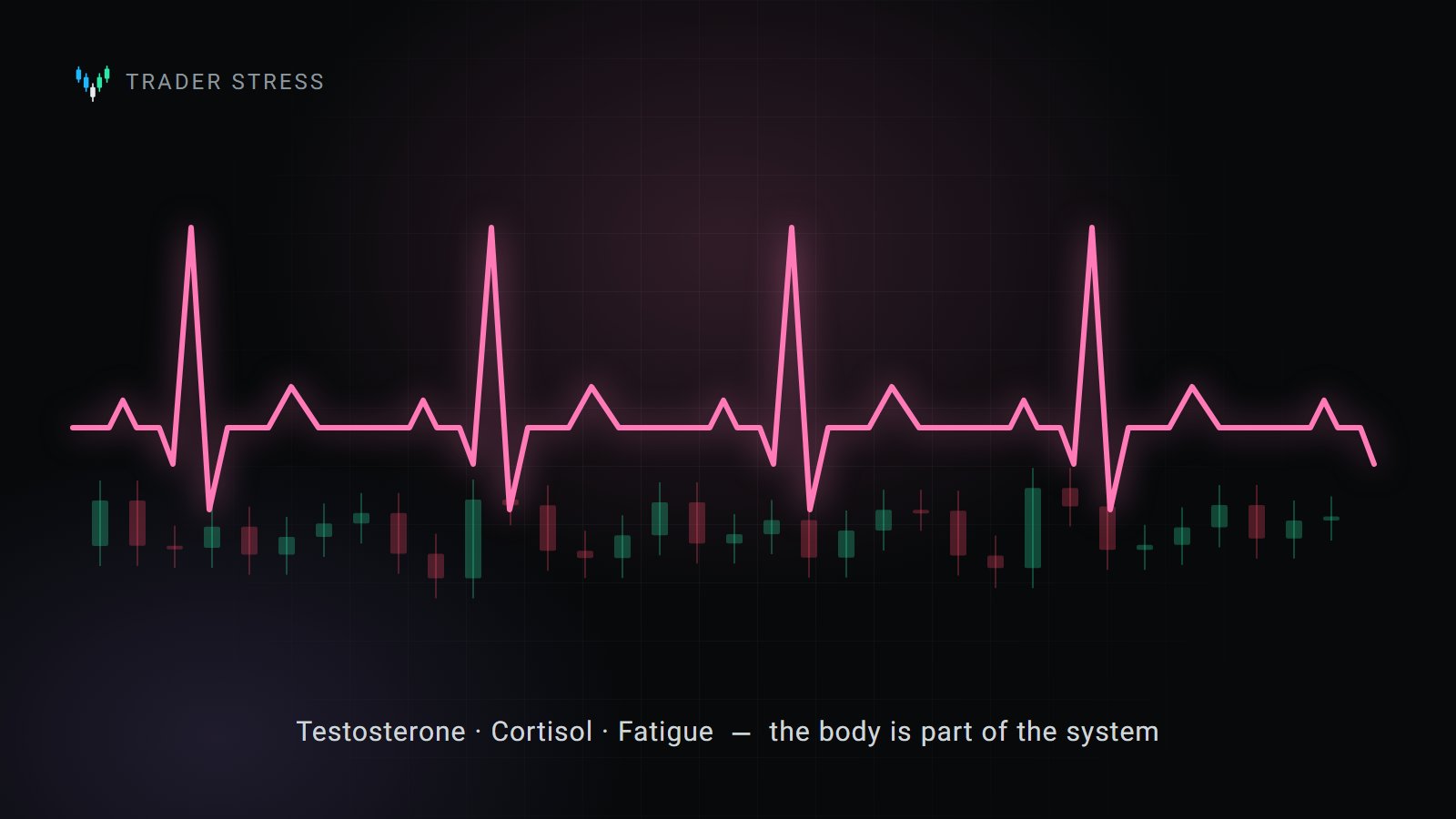
The Trader's Body: Stress, Hormones and Decisions Made Tired
A study of London traders found their hormones rose and fell with their profits and market volatility. Why stress and fatigue shape trading decisions, and what you can practically do about it.
October 31, 2026 · 2 min read
 About Vlevel
Our Mission: Professional, Honest and Accessible Tools for Every Trader
Why we built Vlevel, what we're committed to and the future we want for traders.
2 min read