Position Sizing: Exactly How Much Should You Risk per Trade?
The most important decision in any trade is its size. Fixed-fractional risk, sizing from the stop distance, the maths of drawdowns, and why you should halve the Kelly formula.
November 4, 2026·2 min read·Vlevel team
 Risk management
Most traders spend hours on the entry and seconds on the size. Yet size decides how expensive a mistake becomes. Even a strategy with a positive edge will blow up an account if it's traded too big, through nothing more than an ordinary run of losses. Position sizing is where risk management turns from words into numbers.
Fixed-fractional risk
The most common and most reliable method is to risk a fixed percentage of the account on every trade, usually 0.25 to 1 percent and, for most traders, 2 percent at most. "Risk" means what you lose if the stop is hit, not the full amount you put into the trade.
The size formula
Size = (balance × risk percent) ÷ distance from entry to stop. Example: a $10,000 account risking 1 percent means $100. Buy gold at $4,000 with a stop at $3,980 and the distance is $20, so the size is 100 ÷ 20 = 5 ounces. Put the stop further away and the size shrinks by itself, while the dollar risk stays the same.
The brutal maths of drawdowns
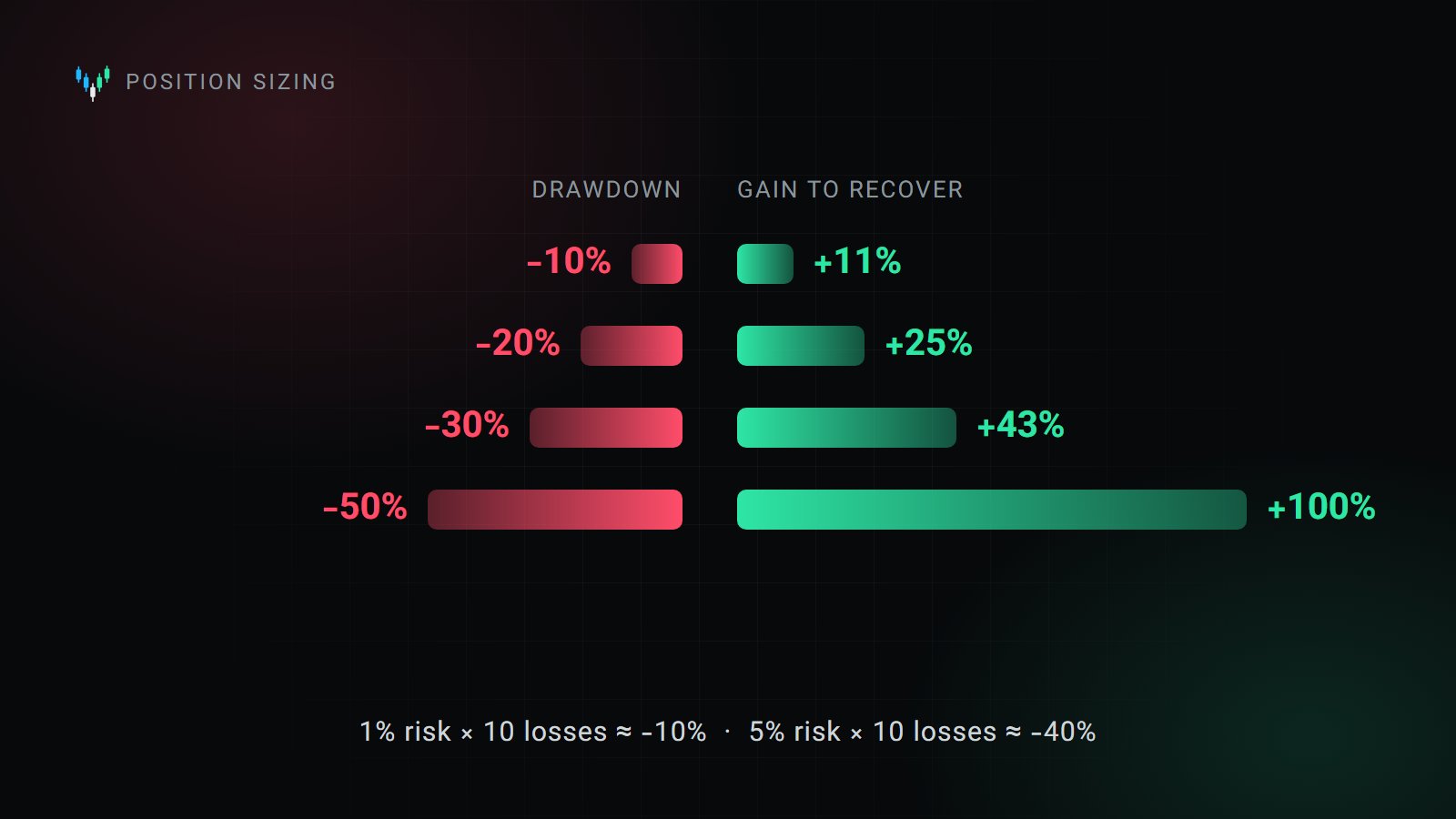
Losses and recoveries aren't symmetric. The bigger the loss, the faster the gain needed to recover grows:
- 10% drawdown → 11% gain to recover
- 20% drawdown → 25%
- 30% drawdown → 43%
- 50% drawdown → 100%
Now add a losing streak. Risking 1 percent, ten losses in a row take the account down about 10 percent. Risking 5 percent, the same ten losses mean a drawdown of about 40 percent. And ten straight losses are not rare for a strategy that wins 40 percent of the time; over a few hundred trades they are almost certain.
The Kelly criterion, and why half is enough
Kelly tells you what fraction to risk for the fastest long-term growth: f = W − (1 − W) ÷ R, where W is the win rate and R is average win over average loss. For a strategy that wins 45 percent with R of 2, Kelly suggests about 17 percent, a number that produces terrifying swings in practice. You never know the true W and R, and backtest estimates are usually optimistic. That's why professionals who use Kelly at all use a small fraction of it (a quarter or less) and cap it at 1 to 2 percent.
Total risk across open positions
One percent per trade becomes five percent on a single idea if you open five same-direction trades on correlated markets such as Bitcoin, Ethereum and Solana. Cap the total risk of open positions too, and count correlated markets as one trade.
The bottom line
Correct sizing keeps you in the game long enough for your edge to work. The simple rule: keep risk per trade small and fixed, compute size from the stop distance, and never raise it after a loss to win it back.
This article is for education only and is not a recommendation to buy or sell any asset. Trading financial markets, especially with leverage, carries high risk.
See the tools for yourself
A live chart with market depth, dozens of indicators and drawing tools, and a Lab that turns an idea into a backtested strategy.
More articles
 Risk management
Thinking in R: Why Risk/Reward Matters More Than Win Rate
You can be profitable with a 40% win rate and go broke with 80%. Measure your trades in R and see the real picture of your performance.
October 24, 2026 · 2 min read
 About Vlevel
Our Mission: Professional, Honest and Accessible Tools for Every Trader
Why we built Vlevel, what we're committed to and the future we want for traders.
2 min read
 Trading psychology
Trading Psychology: The Mind That Costs You More Than the Market
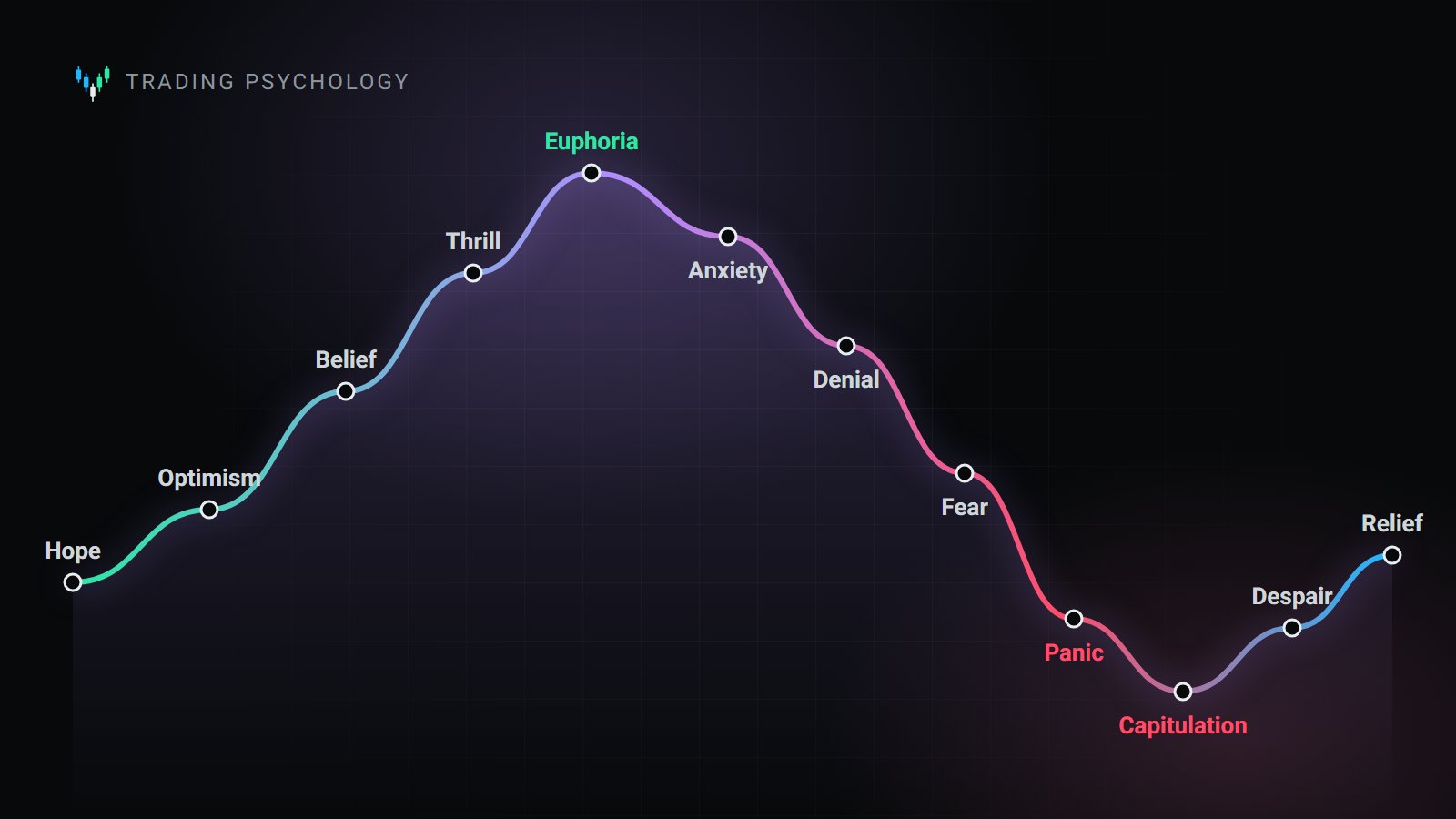
Loss aversion, revenge trading, FOMO and overconfidence: the mental errors that ruin even a good strategy, and practical ways to keep them in check.
November 5, 2026 · 2 min read