Volatility-Based Stops: ATR and the End of the "20-Pip Stop"
A fixed stop is too wide in a quiet market and too tight in a wild one. Use ATR to set stop and target distances from the market's real volatility.
November 2, 2026·2 min read·Vlevel team
 Strategy & backtesting
"Put your stop 20 pips away" is advice you hear a lot, but markets don't have a fixed scale. A $20 move in gold is almost the whole range on a quiet day, and a few minutes of normal noise on US inflation day. A stop that isn't adjusted to conditions is either hit for no reason or makes the loss bigger than it needs to be.
What is ATR?
ATR, the Average True Range introduced by Welles Wilder, measures the typical size of a candle. Each candle's true range is the largest of three values: high minus low, the distance from the high to the previous close, and the distance from the low to the previous close, so gaps are counted too. ATR is a smoothed average of that over recent candles, usually 14. ATR has no direction; it only tells you how much the market is moving right now.
Stops as a multiple of ATR
Instead of a fixed distance, set the stop at a multiple of ATR, usually 1 to 3 times. Example: gold's 14-hour ATR is $12. With a 1.5 ATR stop, the distance is $18. If volatility doubles tomorrow and ATR reaches $24, the stop distance becomes $36 by itself.
The key is to combine the stop with position size: a wider stop in a volatile market means a smaller size, so the dollar risk per trade stays fixed. That way every trade, on a quiet day or a news day, risks the same 1R.
Targets and trailing stops
- Targets in ATR or R: for example a 3 ATR target, or twice the stop distance (2R).
- The Chandelier exit: keep the stop a few ATR below the highest high since entry, so you stay in trends and get out on a real reversal.
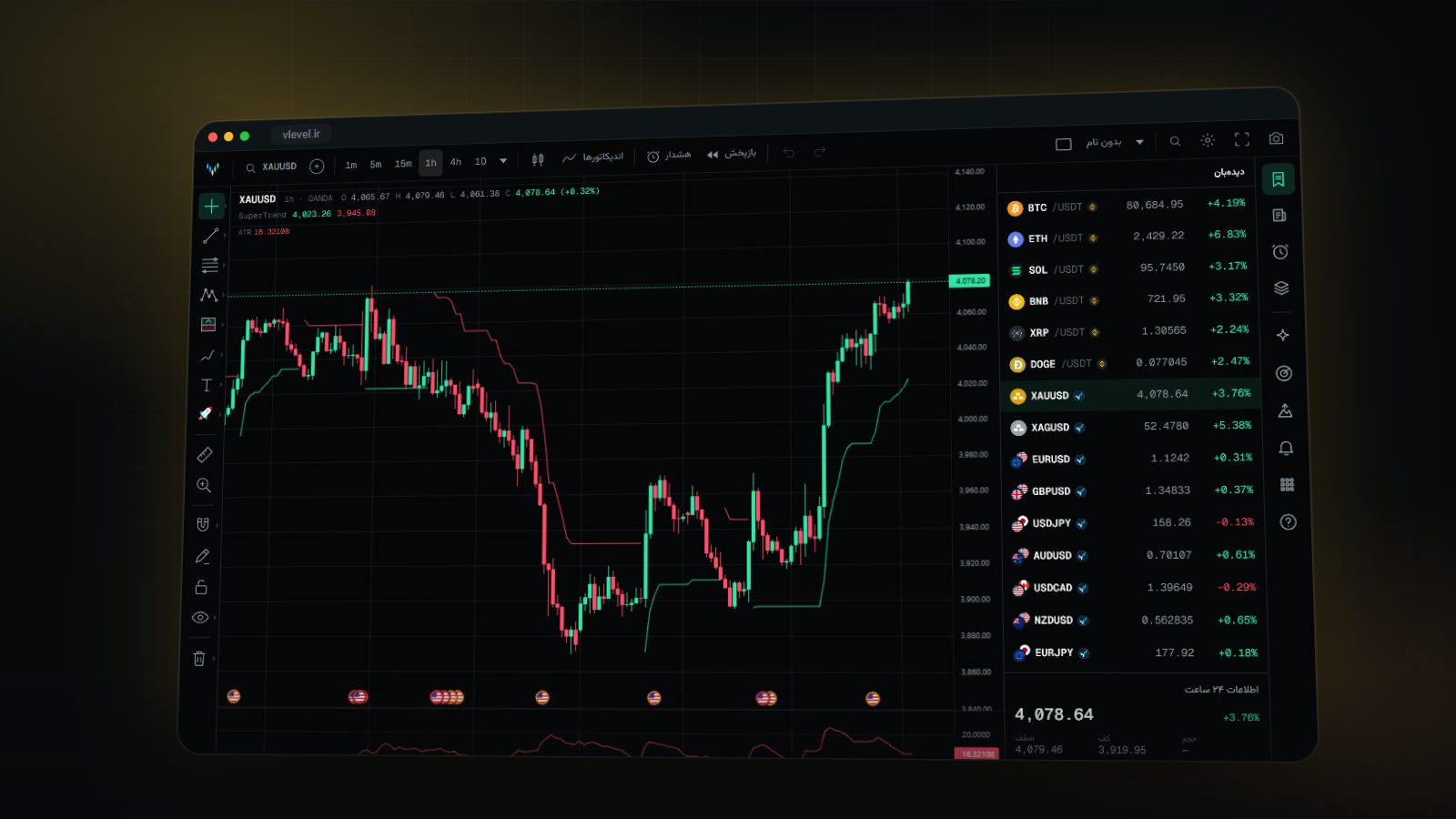
- SuperTrend: the same idea as an indicator, a line that follows price at an ATR-based distance; a flip in direction signals the exit.
Which multiple?
A small multiple (around 1 ATR) gives tight stops and a lower win rate; a large one (2 to 3 ATR) keeps trades longer but makes each loss bigger and the size smaller. The right multiple depends on the timeframe, the market and the kind of strategy, and the only way to find it is testing, not guessing. Be careful not to try dozens of multiples and simply keep the best past result; that's overfitting.
The bottom line
A stop should sit outside the market's normal noise, and the size should be small enough that being stopped out doesn't matter. ATR ties both to one measurable number and turns the stop from taste into a rule.
This article is for education only and is not a recommendation to buy or sell any asset. Trading financial markets, especially with leverage, carries high risk.
See the tools for yourself
A live chart with market depth, dozens of indicators and drawing tools, and a Lab that turns an idea into a backtested strategy.
More articles
 Strategy & backtesting
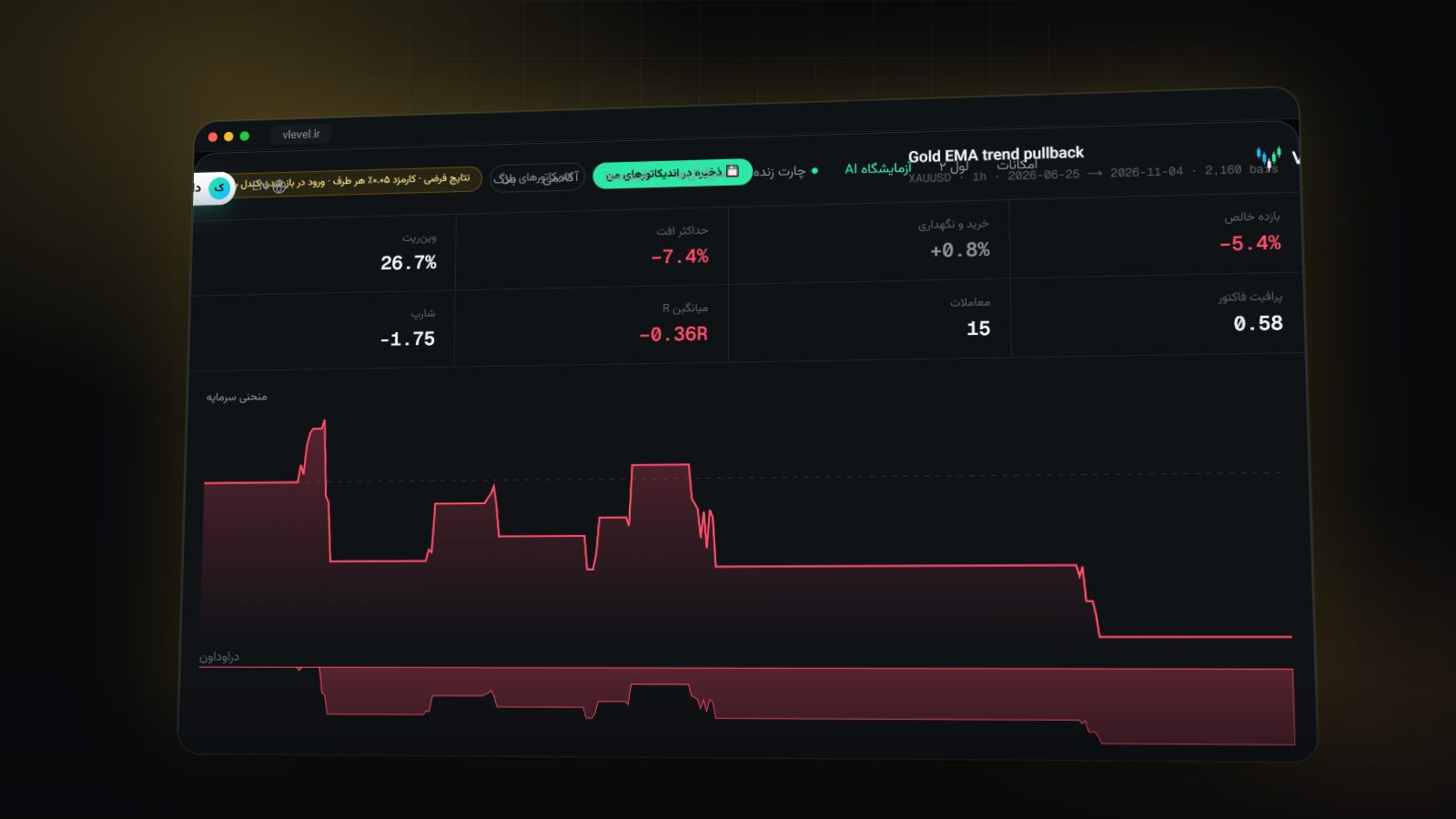
Why Most Backtests Lie, and How Not to Be Fooled
Overfitting, look-ahead bias, ignored fees and short test periods: four traps that make a failing strategy look brilliant on paper.
October 21, 2026 · 2 min read
 About Vlevel
Our Mission: Professional, Honest and Accessible Tools for Every Trader
Why we built Vlevel, what we're committed to and the future we want for traders.
2 min read
 Trading psychology
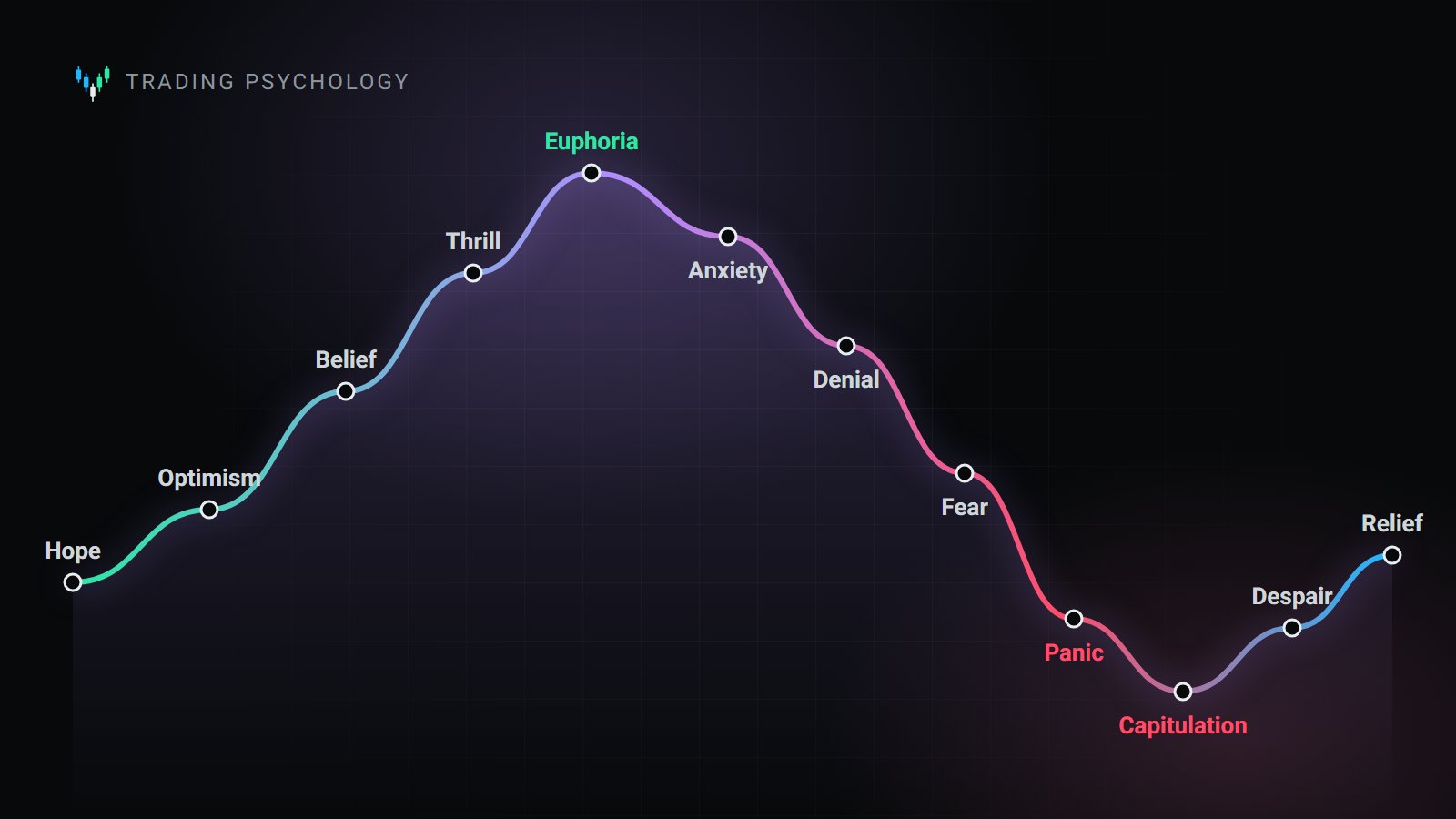
Trading Psychology: The Mind That Costs You More Than the Market
Loss aversion, revenge trading, FOMO and overconfidence: the mental errors that ruin even a good strategy, and practical ways to keep them in check.
November 5, 2026 · 2 min read