Algorithmic Trading and Trading Bots: The Evidence, the Right Use and the Traps
Algorithms carry out a large share of trading in global markets, and credible research shows they improve liquidity. Bots that promise guaranteed returns are another story. Learn to tell the two apart.
November 11, 2026·3 min read·Vlevel team
 AI
To some, a "trading bot" means a money machine that profits day and night; to others, a scam. The truth sits between the two. Algorithmic trading is one of the most established parts of today's financial markets, but it only works with a tested rule and sound risk management behind it.
What algorithmic trading actually is
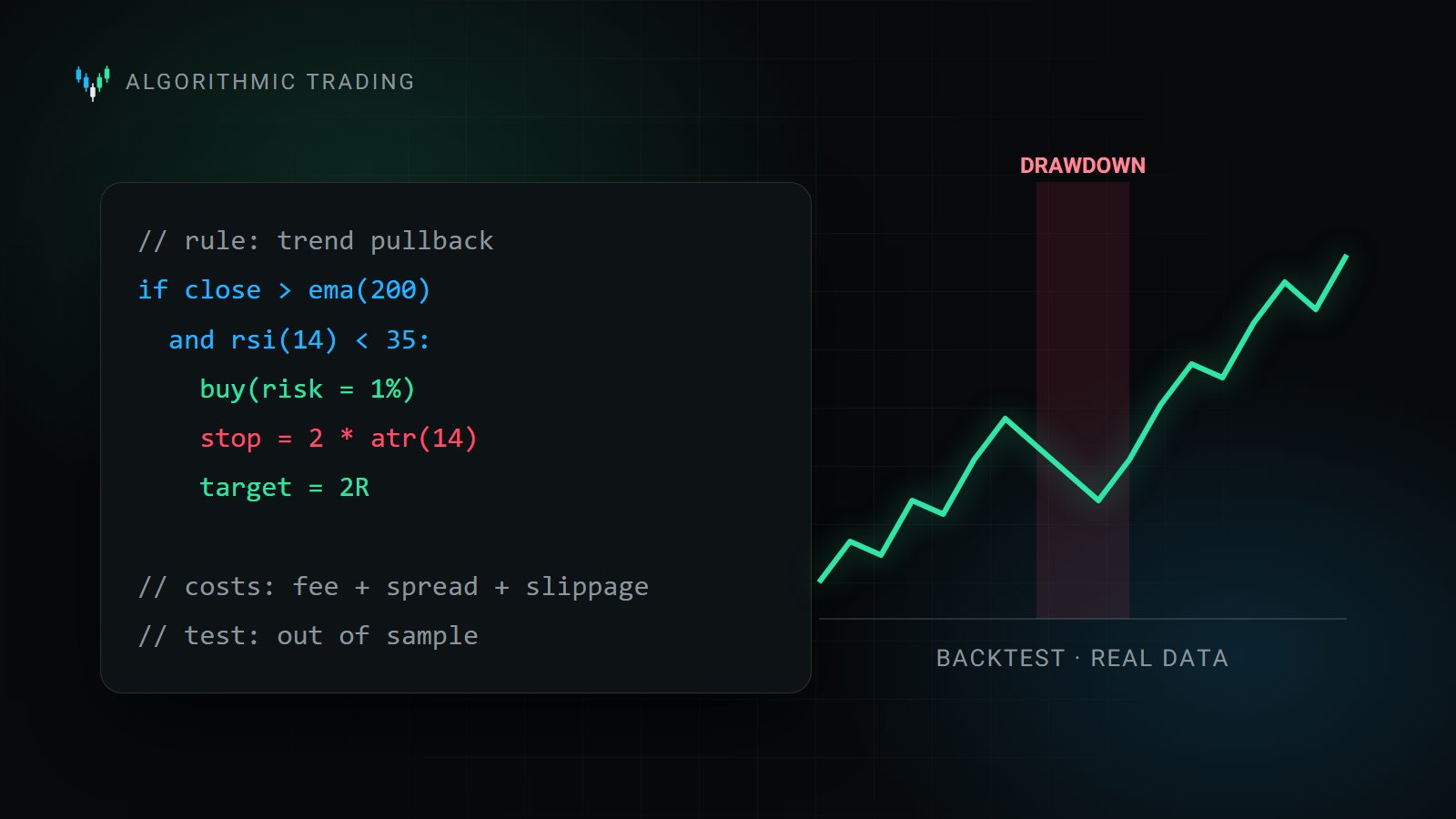
Algorithmic trading means trading by rules a computer executes: when to enter, with what size, where to put the stop and when to exit. The rules can be simple, like two moving averages crossing, or complex statistical models. The key point is that a bot is nothing more than its rules; if the rule has no edge, running it fast and tirelessly only makes the losses more orderly.
What credible evidence says
- A large share of the market: estimates from banks and market-data firms put algorithmic trading at roughly 60 to 70 percent of US equity volume. Funds and banks almost always use algorithms to execute large orders.
- Better liquidity: in a 2011 Journal of Finance paper, Terrence Hendershott, Charles Jones and Albert Menkveld used a 2003 technical change at the New York Stock Exchange to show that algorithmic trading improved liquidity and made quotes more informative, especially in large stocks.
- But not free of cost: Ekkehart Boehmer, Kingsley Fong and Julie Wu studied 42 equity markets from 2001 to 2011 and found that algorithmic trading improves liquidity and price efficiency but raises short-term volatility. And as the 2010 Flash Crash showed, the speed that brings liquidity on normal days can amplify moves in abnormal conditions.
The 2010 Flash Crash: a big lesson
On 6 May 2010, US stock indices fell almost 9 percent within minutes and recovered most of the drop shortly after. A joint report by the SEC and the CFTC found it began with a large sell order in E-mini futures executed by an algorithm that targeted only market volume, not price or time, with high-speed traders amplifying the move. The lesson for anyone building a bot is clear: a rule run without limits and oversight can be a disaster in abnormal conditions.
Bots that promise guaranteed returns
In January 2024 the US Commodity Futures Trading Commission (CFTC) issued an advisory saying AI won't turn trading bots into money machines. According to the CFTC, fraudsters exploit the excitement around AI to sell bots with high or guaranteed returns, while no technology can predict the future or sudden market changes. One example it cited was Mirror Trading International, which defrauded thousands of people with claims of a trading bot while doing little real trading.
- Guaranteed or fixed monthly returns: real markets have no such thing.
- A record you can't check: screenshots only, with no full trade data or drawdowns.
- Pressure to deposit fast or recruit others: the classic sign of a pyramid scheme.
- "AI that understands the market": with no explanation of the rules and no way to test them.
The bigger trap: backtest overfitting
Even an honest bot can mislead. David Bailey, Marcos López de Prado and colleagues showed that the more combinations and settings you try on past data, the more likely your "best" result is just overfitting. A strategy with a brilliant backtest after hundreds of tweaks may have only memorised past noise and fail in the future.
How to judge a bot
- The rules must be clear: you should know when and why the bot enters and exits. A black box can't be evaluated.
- Backtest with costs: include fees, spread and slippage; many short-term strategies make nothing after costs.
- Out-of-sample testing: build the rule on part of the data and test it on data it hasn't seen. If it only works on the data it was built on, don't trust it.
- Drawdown, not just profit: look at the deepest drawdown and longest losing streak and ask whether you can bear them, mentally and financially.
- Start small: even after a good backtest, start with small size and compare live results with the backtest.
- An emergency brake: a daily loss limit and a quick way to switch off are essential for any bot.
The bottom line
Algorithmic trading is a powerful, proven tool: it executes rules without fatigue or emotion, it can be tested, and the largest financial institutions use it every day. But a bot is only as good as its rules and its risk management. Anyone promising guaranteed returns is selling something the market has never sold.
Sources
- Does Algorithmic Trading Improve Liquidity? · Hendershott, Jones, Menkveld · Journal of Finance 66(1), 2011
- Algorithmic Trading and Market Quality: International Evidence · Boehmer, Fong, Wu · Journal of Financial and Quantitative Analysis 56(8), 2021
- Findings Regarding the Market Events of May 6, 2010 · Staffs of the CFTC and SEC · Report, 2010
- AI Won't Turn Trading Bots into Money Machines · U.S. CFTC · Customer advisory, 2024
- The Probability of Backtest Overfitting · Bailey, Borwein, López de Prado, Zhu · Journal of Computational Finance, 2017
This article is for education only and is not a recommendation to buy or sell any asset. Trading financial markets, especially with leverage, carries high risk.
See the tools for yourself
A live chart with market depth, dozens of indicators and drawing tools, and a Lab that turns an idea into a backtested strategy.
More articles
 AI
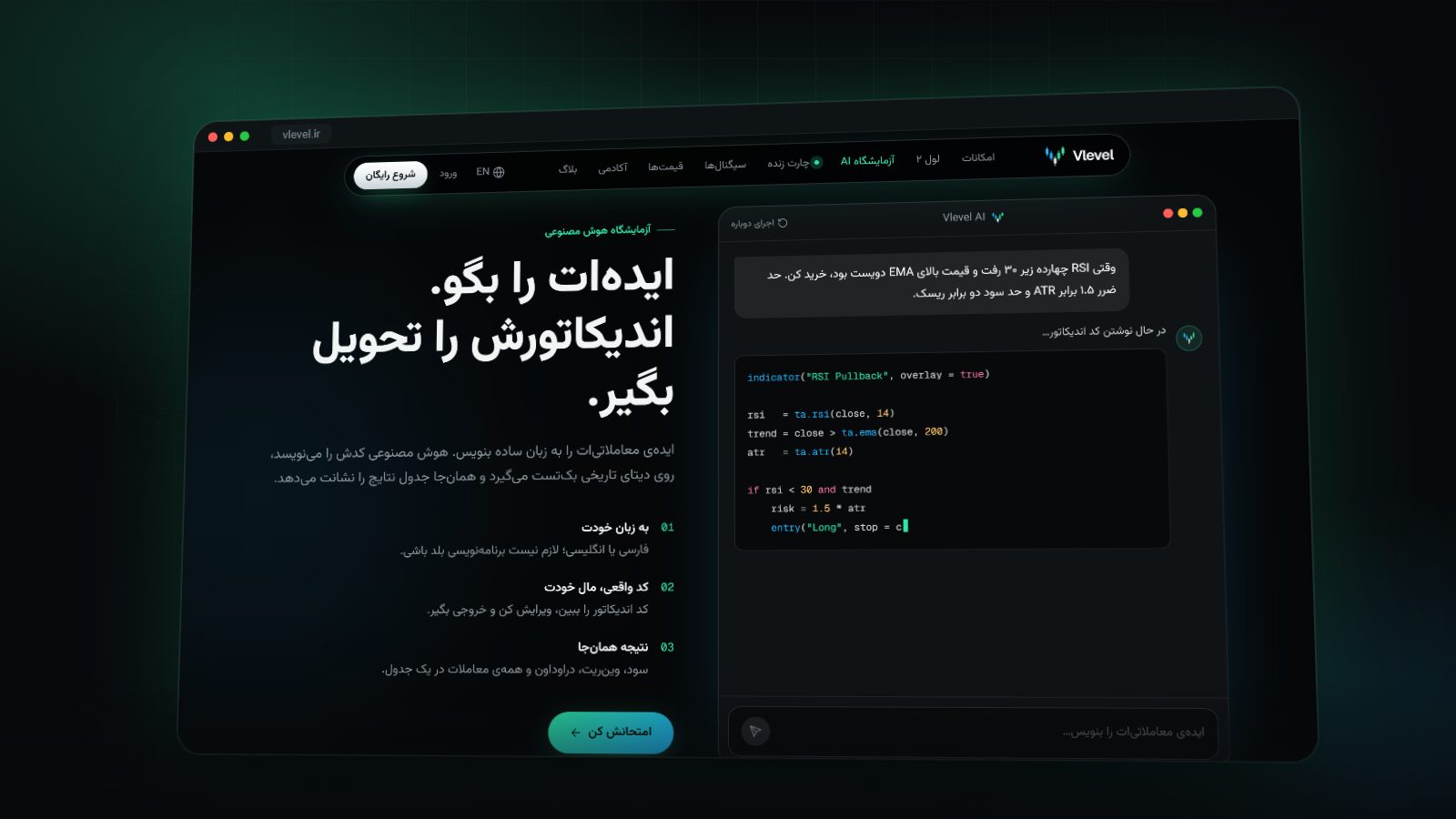
From One Sentence to an Indicator on the Chart: Working with Vlevel's AI Lab
Write your trading idea in plain words. The Lab turns it into precise rules, backtests it on real data and brings it to the chart as an indicator.
October 26, 2026 · 2 min read
 AI
AI in Trading: What It Can Do, and What It Can't
AI doesn't predict the market, but it can turn your idea into precise rules, code and a backtest. A realistic look at where AI belongs in a trader's work.
October 12, 2026 · 2 min read
 About Vlevel
Our Mission: Professional, Honest and Accessible Tools for Every Trader
Why we built Vlevel, what we're committed to and the future we want for traders.
2 min read